Garden tool winter storage: 10 ways to put tools, hoses and the mower away right
Ten minutes of cleaning in November saves a rusty spade and a mower that won't start in April. Here's how to put hand tools, hoses, power equipment, chemicals and seeds away so they come out ready.

The season usually ends with the spade hung up in a crust of October mud and the hose kicked behind the shed. By spring the spade has rusted, the hose has split, and the mower won't start. University extension services give the same short list every fall, and equipment makers add the fuel and battery details. The tips below collect both, then finish with a storage plan so the twine, plant ties and sprayer nozzles are still findable in March.
Clean the soil off every tool before it goes on the wall
Soil holds moisture against the steel all winter, and that's where rust starts. Iowa State University's extension says to scrape caked-on soil off shovels, spades, hoes and rakes with a wire brush or stiff putty knife, wash the tools with a strong stream of water, and dry them. Do pruners and loppers too: Clemson's Home and Garden Information Center notes that pruners should be disinfected with alcohol to avoid spreading plant disease, so give the blades a wipe before they're put away.
Sharpen now, while you have time
Spring is when everything needs doing at once. Iowa State recommends sharpening the blades of hoes, shovels and spades before storage, and Clemson adds pruners, saws and mower blades to the list. If a blade is chipped or bent beyond a file, Clemson suggests replacing it or taking it to a hardware store that sharpens.
Oil the metal so it can't rust over winter
Once the steel is clean and dry, Iowa State says to wipe metal surfaces with an oily rag or spray them with a light penetrating oil. Clemson recommends a household oil on pruner blades. Work the oil into the pivot of pruners and loppers and open and close them a few times.
Sand and oil wooden handles, and deal with the rags safely
Dry wooden handles crack and give splinters. Iowa State's advice is to sand rough handles and wipe them with linseed oil to prevent drying and cracking; Clemson says to keep applying it until the wood stops soaking it in.
The rags need care. The National Fire Protection Association explains that the oils in oil-based stains and finishes give off heat as they dry, and a pile of oily rags can trap that heat until it catches fire. Its advice: never leave them in a pile, hang or spread them outside to dry away from buildings, then put the dried rags in a tightly covered metal container filled with water and detergent.
Drain the hoses, take them off the spigot, and store them coiled
Water left in a hose freezes, expands and splits it. Iowa State says to drain garden hoses and, to prevent kinks, store them on a reel or coiled flat. Unscrew spray wands and sprinklers, drain them as well, and store them indoors with the hose.
Take the hose off the outdoor faucet, too. New Mexico State University's yard and garden column recommends removing hoses from spigots when winterizing, both to protect the hose and as a precaution for the pipe behind the wall.
Decide on the mower's fuel: stabilize it or run it dry
Old gasoline gums up small engines. Briggs & Stratton says fuel can begin to degrade in as little as 30 days. It gives two options. The first is to add fuel stabilizer to a full tank, then run the engine for a few minutes so treated fuel reaches the carburetor. The second, if you don't use stabilizer or your fuel contains alcohol, is to drain the tank and run the engine until it stops. Your owner's manual decides between them, because some engines specify one.
While the mower is out, Briggs & Stratton also recommends changing the oil, sharpening or replacing the blade, checking the air filter, and, on riding mowers with a battery, disconnecting it (negative cable first), cleaning the terminals and storing it somewhere cool and dry. Clemson adds cleaning under the deck, where clippings and weed seeds build up. For a gas string trimmer or blower, follow the storage section of its manual.
Bring cordless batteries indoors at partial charge
Cordless mowers, trimmers and blowers mostly need their batteries looked after. Consumer Reports says most lithium-ion batteries do best stored between 40°F and 80°F, so bring them inside rather than leaving them in an unheated garage or shed. For storage of 30 days or more, it suggests a charge of about 40 percent. Manufacturers differ on charging during storage: Consumer Reports notes that EGO doesn't call for a midseason charge, while Greenworks recommends a full charge every two months and then running it back down to about 40 percent. Your manual wins.
Keep the batteries and chargers together in one labelled box on a closet shelf.
Store pesticides and fertilizers where they can't freeze, leak or be found by kids
Garden chemicals spend the winter in the garage in most homes, and the cold does them no good. University of Nebraska–Lincoln Extension notes that most liquid pesticides can be stored safely between 40°F and 100°F. When a liquid product freezes, its ingredients can separate and crystallize. If crystals remain after it thaws at room temperature, the product won't work and should be disposed of according to the label. Freezing can also crack containers. Dry products cope better with cold but must stay dry, so Nebraska Extension suggests keeping bags off the floor and away from drips.
The EPA's rules for safe storage are simple:
- Keep every product in its original container with the label. Never use drink bottles, jars or milk jugs; Nebraska Extension calls transfers a common cause of accidental poisoning.
- Store them out of reach of children and pets, ideally in a locked cabinet in a ventilated utility area or shed.
- Keep them away from food, animal feed and medical supplies, and away from spots that flood.
- Keep flammable products away from ignition sources (furnaces, cars, grills).
- Buy only what you'll use soon, and dispose of anything you can no longer identify.
Nebraska Extension also says to store pesticides separately from fertilizers and seeds.
Store leftover seed cool, dry and sealed
Half-used seed packets are worth keeping. Iowa State says most flower and vegetable seed stays viable for 2 to 3 years when it's stored properly: leave the seed in its original packets, put the packets in a tightly sealed jar or lidded can, and keep it in the refrigerator or another cool place such as a cool closet. A desiccant helps: Iowa State suggests a small envelope with a tablespoon or two of powdered milk, or silica gel equal to the weight of the seed (taken out after a couple of weeks so the seed doesn't over-dry).
Write the year on each packet before it goes in the jar.
Hang the long tools and bin the small stuff by job
With everything clean and oiled, give each kind of thing a home:
- Long-handled tools on wall hooks or a rail, heads up and off the floor, so moisture can't wick into the wood and the blades don't touch the concrete. Iowa State's advice is simply to hang or store tools in a dry location.
- The mower under a cover or in a dry shed or garage. Briggs & Stratton warns against storing fuelled equipment near anything with a pilot light, such as a furnace or water heater.
- Small supplies in lidded bins sorted by job: planting (labels, ties, twine), watering (washers, nozzles, timers), pruning (spare blades, stone, oil).
How StorageBuddy helps with garden storage
- The photo is the list. Snap a bin of garden odds and ends and the AI itemizes it, outlining each item on the photo. No typing in a cold garage.
- Find it in spring. Search "pruning saw" or ask out loud and get the container, its short code and its spot, like
Garage → Wall rack → G-WR-02. - Tags for the season. Tag winter-stored bins
gardenand pull up every one of them in a single search in March. - Works in the shed. Capture works offline and the AI catches up when you're back in signal. Free covers 10 containers per space with unlimited items, which is enough for most garden setups, and Plus or Lifetime lifts the cap.
Free to start: your first 10 containers per space with unlimited items, QR labels, sharing, offline capture and full export. Plus and Lifetime lift the container cap. Nothing you catalog ever expires.
The garden shed shutdown checklist
Print it, stick it on the bin, tick it off. One page.
- Scrape, wash and fully dry every hand tool
- Sharpen hoes, spades, shovels and pruners; disinfect pruner blades
- Wipe metal with an oily rag; oil the pruner pivots
- Sand and oil wooden handles; dry the rags outside, then into a covered metal can
- Drain hoses, sprinklers and wands; take the hose off the spigot
- Mower: stabilizer in a full tank or run it dry, per the manual; oil, blade, filter
- Bring cordless batteries indoors at about 40 percent charge
- Pesticides in original containers, locked up, between 40°F and 100°F
- Seeds in sealed jars somewhere cool, with a desiccant and the year written on
- Hang long tools off the floor; bin small supplies by job and label each bin
From “Garden tool winter storage: 10 ways to put tools, hoses and the mower away right” · https://storagebuddy-ai.com/blog/garden-tool-winter-storage · StorageBuddy AI
Questions people ask
How do I winterize garden tools?
Scrape and wash off the soil, dry the tools completely, sharpen hoes, spades and pruners, wipe the metal with an oily rag, and sand and oil wooden handles with linseed oil. Hang them in a dry place, off the floor.
Should I drain the gas from my lawn mower for winter?
Either stabilize or drain. Briggs & Stratton recommends adding fuel stabilizer to a full tank and running the engine briefly, or, if you don't use stabilizer or your fuel contains alcohol, draining the tank and running the engine until it stops. Check your owner's manual, which may specify one method.
Can I leave cordless tool batteries in a cold garage?
It's better not to. Consumer Reports says most lithium-ion batteries do best between 40°F and 80°F, and suggests storing them at about 40 percent charge for anything over 30 days. Bring them indoors and follow the maker's guidance on charging during storage.
Can pesticides and fertilizers stay in the garage over winter?
Only if the space stays above freezing and below about 100°F, the products are in their original labelled containers, and they're locked or out of reach of children and pets. If the garage freezes, move liquids somewhere frost-free.
How long do leftover garden seeds last?
Iowa State's extension says most flower and vegetable seed stays viable for 2 to 3 years if kept cool and dry: in its packets, in a sealed jar, in the refrigerator or a cool closet, ideally with a desiccant.
Sources & further reading
- Iowa State University Extension, How should I prepare my garden tools for winter?: clean, sharpen, oil metal, linseed oil on handles, drain and coil hoses, store dry.
- Clemson Cooperative Extension HGIC, Winter tool care: disinfect pruners, sharpen, oil until the wood stops absorbing it, clean the mower deck.
- National Fire Protection Association, Safety with oily rags: why oily rags self-heat; dry them outside, then store in a covered metal can with water and detergent.
- New Mexico State University, Disconnect water hose in winter?: remove hoses from spigots when winterizing.
- Briggs & Stratton, How to properly winterize your mower: fuel degradation from 30 days, stabilizer, oil, blade, air filter, battery.
- Briggs & Stratton, Seasonal storage: stabilize or drain fuel; never store near pilot lights, furnaces or water heaters.
- Consumer Reports, Your electric mower needs attention in winter: store batteries indoors at 40°F to 80°F, about 40 percent charge.
- University of Nebraska–Lincoln CropWatch, Winter pesticide storage: liquid pesticides 40°F to 100°F; what freezing does.
- Nebraska Extension in Lancaster County, Safe winter pesticide storage: original containers, locked storage, dry products off the floor, separate from fertilizers and seeds.
- U.S. EPA, Storing pesticides safely: original labelled containers, out of reach, away from food and ignition sources.
- Iowa State University Extension, Storing left-over flower and vegetable seeds: 2 to 3 years viability, sealed jar, refrigerator, desiccants.
Keep reading
10 garage organization tips that still work in March
A few rules for the garage you already have. Zone by how often you reach for things, use one tote size, stay under the shelf rating, and photograph every bin so you never open six to find one.
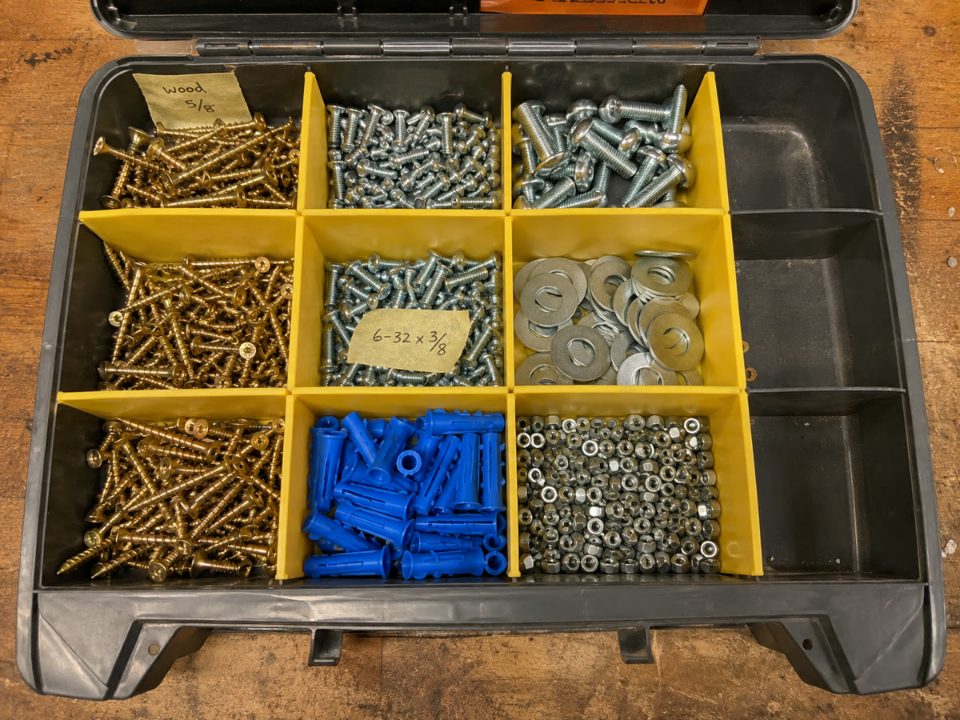
10 workshop organization tips for tools, fasteners and the drawer of mystery screws
A workshop is organized when the tool you need is within reach and the fastener you need is in a labelled drawer. These tips cover the wall, small parts, rust and chemicals.
10 basement storage ideas for a damp-prone space
Humidity damages basement storage over months, and a leak does it overnight. Measure the air, get everything off the concrete, replace cardboard with sealed totes, and keep an inventory so you know what's on the far shelf.
The garage organization system that actually sticks
Zones, vertical storage, numbered totes, seasonal rotation and the photograph-before-you-shelve habit.