10 workshop organization tips for tools, fasteners and the drawer of mystery screws
A workshop is organized when the tool you need is within reach and the fastener you need is in a labelled drawer. These tips cover the wall, small parts, rust and chemicals.

A workshop has two storage problems. Tools are big and relatively few, and they belong on a wall where you can see them. Small parts run into the thousands (screws, bolts, bits, fittings) and are useless unless you can find the exact one. These tips cover both, with the load ratings and humidity numbers you'd want before drilling into the wall.
Zone by workflow: cut, build, finish, and the dirty corner
Work moves through a shop in order: stock gets cut, parts get assembled, assemblies get sanded and finished. Give each step a zone with its tools on the wall beside it, and keep the finishing table away from the saw. The dirty corner (grinder, sander, dust collection) goes farthest from finishing. If a car shares the garage, its footprint stays empty.
Daily tools within arm's reach, everything else in a drawer
If you pick a tool up more than once a session (tape, pencil, square, driver, chisel, mallet), hang it on the wall at the bench. Weekly tools go in labelled drawers or a chest under the bench. Yearly tools stay in their cases on a high shelf.
Pegboard for light, French cleats for heavy, and read the numbers
Pegboard is quick and easy to rearrange, but it has limits. Wall Control, which makes metal pegboard, rates its panels at about 100 pounds each on drywall anchors and 200 pounds into studs, with individual hooks around 5 to 15 pounds and small bins at a couple of pounds. That covers hand tools, not a router or a bench grinder. A French cleat is a 45-degree plywood strip on the wall with a matching strip on each holder. The full strip carries the load into the studs, so it holds heavy tools. Many shops use cleats for power tools and clamps, pegboard for small things.
Sort fasteners by type, then size, one kind per cell
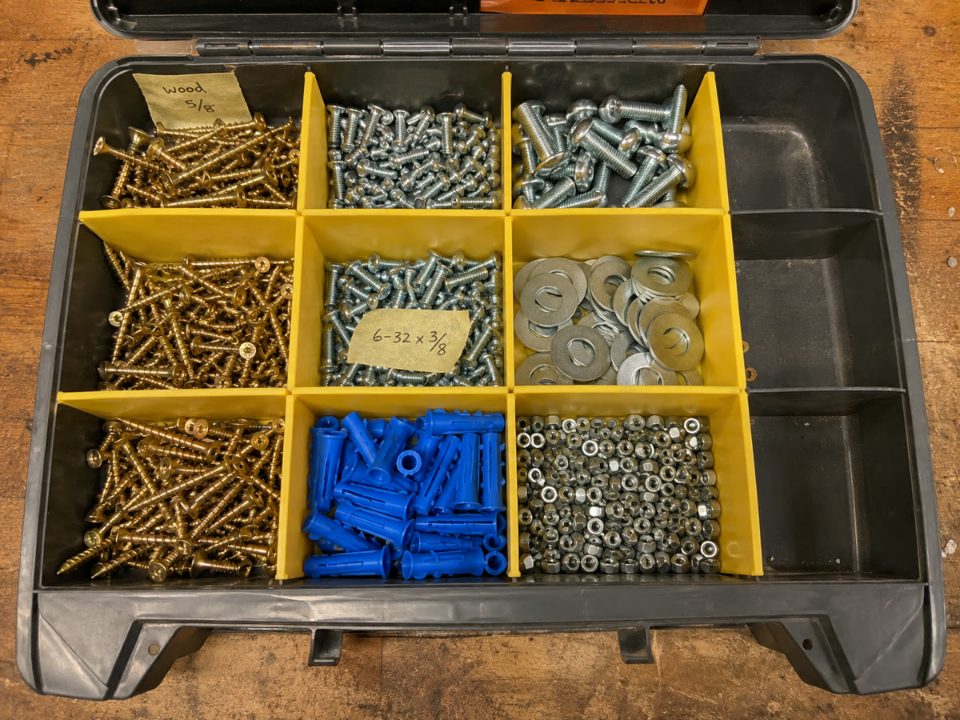
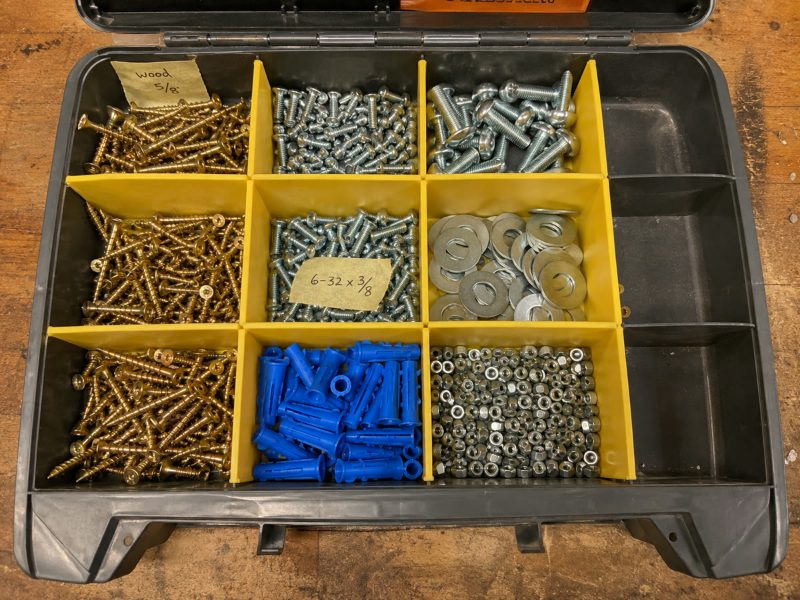
Sort by type first (wood screws, machine screws, bolts, nuts, washers, nails, anchors), then by size, and give each its own cell in a drawer cabinet or compartment case. Label each drawer with the size and tape a sample to the front. A label reading “#8 × 1¼” is hard to match by eye when you're holding a stripped screw.
Quarantine the mixed jar and keep bulk backstock elsewhere
Every shop collects mixed hardware from things taken apart. Keep one jar labelled “sort me” and sort it when it fills. Bulk backstock (a box of 500 drywall screws, a 25-pound pail of deck screws) goes in a sealed, labelled bin on a shelf. Decant a few hundred into the working drawer and leave the rest in the bin.
Keep the air under 50 percent humidity, and the iron oiled
Rust is a humidity problem. Zerust, which makes corrosion inhibitors, recommends keeping storage below 50 percent relative humidity; a dehumidifier in damp months handles most of that. Wipe cast-iron tables and plane soles with light oil or paste wax. Put VCI (vapour corrosion inhibitor) paper or emitters in closed drawers of steel tools, and silica packs in cases. Keep tools off bare concrete, and let a sweating tool dry before it goes in a drawer.
Put the bench and the big tools on wheels
Small shops get rearranged for every project. With the workbench and stationary tools (table saw, planer, drill press stand) on locking casters, you can pull them out for a big cut and push them back for the car. Lock the casters before every cut.
Rack lumber vertically, and give offcuts a size limit
Store full-length stock vertically in a simple rack (a 2×4 frame with dividers) or horizontally on high wall brackets, off the floor and sorted by species or thickness. Pieces over a set length (say 12 inches) go in a bin, and anything shorter goes in the kindling box. When the bin fills, the next project uses offcuts first. Stand sheet goods on edge in a strapped rack, not against the car.
Track consumables with a reorder line
Blades, bits, sandpaper, glue, tape, finish and gloves all tend to run out mid-project. Give each one a single home (sandpaper by grit in a file box, bits in a labelled index) and set a reorder point: when the second-to-last blade comes out, it goes on the list.
Store the chemicals like a fire marshal would, and inventory everything else
Flammable liquids (solvents, finishes, gasoline for the mower) go in a metal cabinet, or a sealed metal box in a small shop, away from the furnace, water heater and anything that sparks. A pile of oily rags can self-heat, so put them in a lidded metal can or lay them flat outside to dry. Many jurisdictions limit gasoline in an attached garage to around ten gallons in approved containers. Everything else gets the fastener treatment: a container, a label and a record of where it is.
How StorageBuddy helps with your workshop
- Honest AI for small parts. It reads labelled compartment bins into a list and calls a mixed jar “assorted screws.” It doesn't invent counts.
- Search from the hardware store. “Do I have M6 × 40?” shows the bin it's in.
- Codes on every drawer. Auto short codes and QR labels (Avery sheets, Brother, DYMO or Niimbot printers) make a wall of identical drawers addressable.
- No counting. The AI lists “assorted washers,” not a guess at how many. A
restocktag marks the bins to top up.
Free to start: your first 10 containers per space with unlimited items, QR labels, sharing, offline capture and full export. Plus and Lifetime lift the container cap. Nothing you catalog ever expires.
The workshop reset checklist
Print it, stick it on the bin, tick it off. One page.
- Set zones for cutting, building, finishing and dust; keep the car's spot clear
- Hang daily tools at the bench; drawer the weekly ones; case the yearly ones
- Put heavy tools on French cleats; keep pegboard within its ratings
- Sort fasteners by type, then size; label and photograph each bin
- Keep one “sort me” jar; shelve bulk backstock in sealed bins
- Hold humidity under 50 percent; wax bare iron; use VCI in drawers
- Put the bench and stationary tools on locking casters
- Rack lumber off the floor; set a length limit for offcuts
- Give each consumable one home and a reorder point
- Store flammables in a metal cabinet and oily rags in a metal can
From “10 workshop organization tips for tools, fasteners and the drawer of mystery screws” · https://storagebuddy-ai.com/blog/workshop-organization-tips · StorageBuddy AI
Questions people ask
Pegboard or French cleats, which is better?
Pegboard for light hand tools you rearrange often. French cleats for anything heavy (power tools, clamp racks, cabinets), because the cleat strip carries the load into the studs. Metal pegboard panels are rated around 100 to 200 pounds depending on fixings.
How do you organize screws, nuts and bolts?
By type first, then by size, one kind per cell in a small-parts cabinet or compartment case, with the size on the label and a sample taped to the front. Keep bulk boxes separate as backstock, plus one “sort me” jar for strays.
How do I keep my tools from rusting in the garage?
Keep relative humidity below about 50 percent with a dehumidifier, wax or oil bare iron, use VCI paper or emitters in closed drawers, keep tools off concrete, and let wet tools dry before storing them.
How do I organize a small workshop in a one-car garage?
Put the bench and stationary tools on locking casters, hang daily tools on the wall at the bench, keep everything else in drawers and labelled bins, rack lumber vertically, and leave the car's footprint empty.
What's the safest way to store solvents and gasoline in a workshop?
In approved containers inside a metal cabinet or box, away from the furnace, water heater and spark sources, within local fire-code limits (often about ten gallons of gasoline in an attached garage). Oily rags go in a lidded metal can.
Sources & further reading
- Wall Control, pegboard load guidance: per-panel, per-hook and per-bin ratings.
- Saws on Skates, Pegboard vs French cleat: why cleats carry heavy tools.
- Zerust, Protecting metal parts in high humidity: keep storage below 50 percent RH; VCI.
- Lehi City Fire Department, Home fuel storage limits: example gasoline limits for attached garages.
- Mississippi State University Extension, Gasoline safety and precautions: approved containers and quantity limits.
Keep reading
10 garage organization tips that still work in March
A few rules for the garage you already have. Zone by how often you reach for things, use one tote size, stay under the shelf rating, and photograph every bin so you never open six to find one.
10 basement storage ideas for a damp-prone space
Humidity damages basement storage over months, and a leak does it overnight. Measure the air, get everything off the concrete, replace cardboard with sealed totes, and keep an inventory so you know what's on the far shelf.
10 camping gear storage ideas so the next trip packs itself
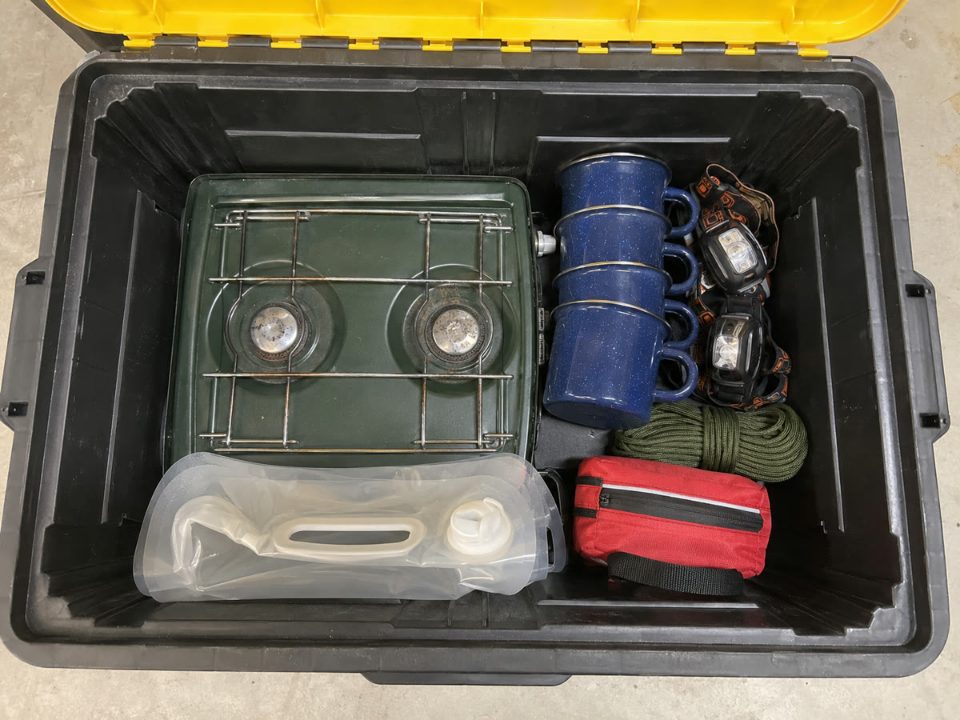
Organize camping gear the week you get home, while you still know what ran out. Build kits by trip type, store soft goods loose, and use a photo of each tote as next summer's packing list.
The garage organization system that actually sticks
Zones, vertical storage, numbered totes, seasonal rotation and the photograph-before-you-shelve habit.