Holiday kitchen gear storage: 10 tips for the roasting pan, cookie cutters and good china
The roasting pan, the turkey baster and the cookie cutters get used for a few weeks a year and take up prime cabinet space the rest of it. Pack them by event, clean and dry, somewhere they'll survive, and find them in November.
Every kitchen has gear that works hard for six weeks and sits idle for the rest of the year: the roasting pan and rack, the turkey baster, the gravy boat, the cookie cutters, the cake stand, the extra platters and the good china. Kept in the everyday cabinets, it crowds out the things you use daily. Packed away carelessly, it rusts, chips or disappears, and you end up buying another baster on the Tuesday before Thanksgiving. These tips cover packing it by event, getting it clean and dry, protecting each material, choosing where it lives and getting it back out on time. The care advice comes from the people who make the stuff: Lodge, Lenox, John Boos, KitchenAid and others.
Pull out everything you use for one season only
Go through the cabinets and pull anything you used only between Thanksgiving and New Year's last year. Typical candidates are the roasting pan and rack, baster, carving set, gravy boat, extra serving platters and bowls, cake and cookie stands, cookie cutters, decorating tips and piping bags, festive baking pans, the punch bowl and the second set of dishes. Keep a pan or platter in the kitchen if it gets used monthly. The rest can move out, and the space it leaves goes to the things you use every week.
Pack by event, not by type of object
A bin of “all the serving pieces” helps nobody when you're making cookies. Pack by occasion instead: a Thanksgiving bin (roasting rack, baster, carving set, gravy boat, turkey platter), a cookie bin (cutters, decorating tips, piping bags, sprinkles, cooling racks) and a hosting bin (extra serveware, cake stands, napkins, place cards). When the event comes round you bring out one bin and everything for it is there. Big pieces that won't fit, like the roasting pan itself, go next to their bin on the same shelf.
Wash it, then dry it more than you think you need to
Grease and crumbs attract pests, and damp attracts rust and mildew. Wash everything before it goes away, then dry it fully: Lenox says to dry dishes completely before packing to prevent water spots or trapped moisture, and Lodge says to dry its enamelled cast iron completely before storing it. For metal tools with seams and rolled edges, towel them off and let them sit out for a few hours before they go in a closed bin.
Oil the cast iron and give lidded pots a spacer
Cast iron and carbon steel rust quickly in storage. Lodge says even a well-seasoned pan can rust if it soaks, air-dries or is stored somewhere damp. Dry it right after washing and wipe on a very thin coat of cooking oil before it goes away. For enamelled Dutch ovens and lidded casseroles, Lodge recommends putting pot protectors between pot and lid to prevent moisture buildup and chipping. If you find rust in November, Lodge's fix is to scour the rust with steel wool, wash, dry, oil thinly and bake at 450 to 500°F for an hour.
Put a protector between stacked nonstick pans and bakeware
Holiday bakeware tends to get stacked in a box, and that scratches nonstick. Made In says nonstick pans can be stacked safely as long as a pan protector, dish towel, trivet, oven mitt or other thick cloth sits between each pan. Keep them away from loose knives, metal utensils and the cookie cutters. A roasting pan rack is a common culprit: wrap it or pack it separately rather than leaving it inside the pan.
Dry metal baking tools immediately, and treat wood gently
Tin-plated steel cookie cutters rust where the tin has worn. Liberty Tabletop's care page for Ann Clark's tin-plated cutters says they are not dishwasher safe and should be hand-washed and dried immediately. One trick it suggests: put them on a clean baking sheet in the cooling oven after you turn it off. Wood needs different care. John Boos says not to soak or submerge wooden boards, to oil them about once a month depending on use, and to store boards on edge away from direct sunlight. The same habits keep wooden spoons, rolling pins and serving boards from splitting.
Wrap the china and glass, and never nest the cups
The good dishes are the most expensive thing in the holiday kitchen and the easiest to break. Lenox recommends a felt or paper divider between every plate, no more than 8 to 10 pieces per stack, and cups and mugs that are never nested inside each other, with handles kept from pressing against one another. Wrap in acid-free tissue, felt or bubble wrap with paper underneath, but not newspaper, because Lenox says the ink can transfer. Padded china cases or bins with dividers make the stacks easy to lift out. Label the box “fragile” and the side that goes up.
Keep it indoors when you can, and sealed and off the floor when you can't
Garages and attics are rough on kitchen gear. Lenox says to avoid storing china in attics, garages or anywhere with extreme heat, cold or humidity. Lodge names damp storage as a cause of rust. KitchenAid says oil separates out of a stand mixer's gear grease and leaks more in warm weather, and that mixers stored on their side can leak oil through the speed control slots. The best spots are a high cabinet, a hall or bedroom closet shelf, under a bed or a dry interior storage room.
If the garage is the only option, keep metal and plastic tools there in sealed plastic bins on shelves, and keep china, wood and appliances inside. Mice are the other reason. UC IPM notes that house mice can squeeze under gaps ¼ inch tall, build nests from finely shredded paper and other fibrous material, and that food storage should be kept sealed. A cardboard box of greasy roasting gear on a garage floor is both food and nesting material.
Store small appliances upright, with their parts in a bag
Holiday small appliances (the stand mixer that only comes out for cookies, the electric knife, the slow cooker for the buffet) should be stored upright, cleaned and dry, with their attachments, cords and manuals bagged together inside the box or taped to the appliance. KitchenAid says an idle mixer can leak oil and recommends running it at speed 10 for 2 minutes with nothing in the bowl before using it, so do that a day before baking starts. Keep the original box if you have room; it's the best-fitting padding there is.
Put the retrieval on the calendar two weeks ahead
The system only works if the gear comes back out in time. Set a reminder about two weeks before Thanksgiving to bring the Thanksgiving bin back to the kitchen. Open it, check that nothing is missing, rusty or chipped, and give everything a rinse after a year on a shelf. Do the same for the cookie bin before the first baking day. Restock the consumables then, not on the day: piping bags, parchment, food colouring, foil pans. When the season ends, wash, dry, pack and photograph it all again on the way back to storage.
How StorageBuddy helps with holiday kitchen gear
- One search per event. Tag bins
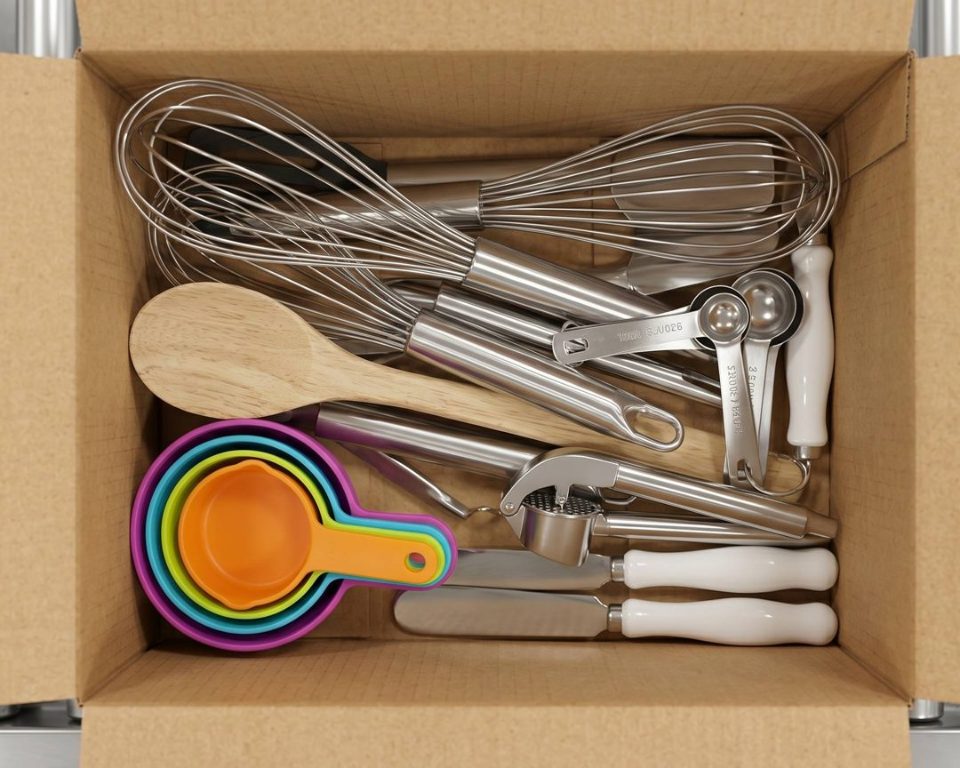
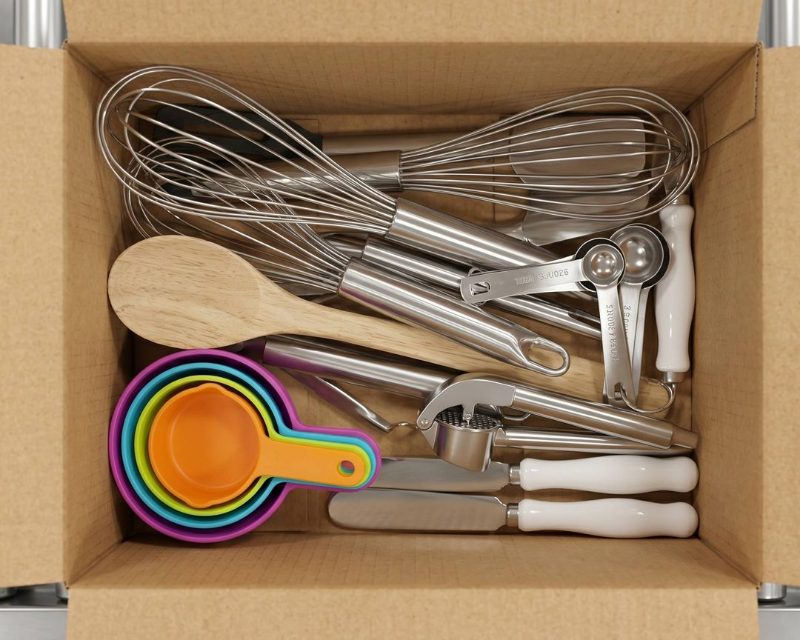
thanksgivingorcookiesand a single search returns every bin, pan and platter for that event, wherever it is. - The photo is the list. Snap the open bin and the AI lists the whisks, cutters and measuring cups inside, outlining each one.
- QR labels anyone can read. A scan opens the bin's contents in a phone browser, with no login, so helpers can find things too.
- Free to start. Free covers 10 containers per space with unlimited items; Plus and Lifetime lift the cap. Sharing and export are free on every plan.
Free to start: your first 10 containers per space with unlimited items, QR labels, sharing, offline capture and full export. Plus and Lifetime lift the container cap. Nothing you catalog ever expires.
The once-a-year kitchen gear checklist
Print it, stick it on the bin, tick it off. One page.
- Pull out everything used only during the holidays
- Pack by event: Thanksgiving bin, cookie bin, hosting bin
- Wash and dry everything completely before packing
- Oil cast iron thinly; use pot protectors under lids
- Put protectors between stacked nonstick pans and bakeware
- Dry tin cookie cutters immediately; store wood on edge
- Divide plates, stack 8 to 10 at most, never nest cups
- Store indoors; in the garage only sealed bins on shelves
- Keep small appliances upright with parts bagged together
- Calendar a retrieval two weeks before the event
From “Holiday kitchen gear storage: 10 tips for the roasting pan, cookie cutters and good china” · https://storagebuddy-ai.com/blog/holiday-kitchen-gear-storage · StorageBuddy AI
Questions people ask
Where should I store a roasting pan I only use once a year?
Clean, dry and with the rack wrapped separately, on a high shelf, in a closet or under a bed with the rest of your Thanksgiving gear. If it has to go in the garage, keep it in a sealed bin on a shelf, not on the floor.
Is it OK to store kitchen items in the garage?
Metal and plastic tools in sealed bins on shelves usually do fine. Keep china, wood and small appliances indoors: Lenox advises against garages and attics for china, damp causes rust on cast iron, and KitchenAid says warm weather makes mixers leak oil.
How do you store cookie cutters so they don't rust?
Hand-wash tin-plated cutters and dry them right away (the residual heat of a switched-off oven helps), then store them in a closed container in a dry room. Keep them away from nonstick pans, which they can scratch.
How do you store fine china long term?
Wash and dry it fully, put felt or paper dividers between plates, stack no more than 8 to 10 pieces, don't nest cups, and wrap in acid-free tissue or bubble wrap rather than newspaper. Keep it indoors, away from heat, cold and humidity.
How early should I get holiday kitchen gear out of storage?
About two weeks before the event. That leaves time to check for rust or chips, restock consumables and replace anything missing before the stores get busy.
Sources & further reading
- Lenox, How to store fine china correctly: dividers, stack limits, cups, wrapping, no newspaper, avoid garages and attics.
- Lodge Cast Iron, How to restore and season a rusty cast iron skillet: what causes rust and how to remove it.
- Lodge Cast Iron, Cleaning and care: enameled cast iron: dry completely, cool dry storage, pot protectors under lids.
- Made In, The complete guide to maintaining nonstick cookware: a protector or cloth between stacked pans.
- John Boos, Frequently asked questions: don't soak wood, oil monthly, store boards on edge away from sunlight.
- Liberty Tabletop, Cookie cutter use and care: tin-plated cutters are hand-wash only and must be dried immediately.
- KitchenAid, Oil leaking from stand mixer: warm weather, infrequent use and side storage cause leaks; speed 10 for 2 minutes.
- UC Statewide IPM Program, House mouse: ¼ inch gaps, shredded-paper nests, sealed food storage.
Keep reading
10 pantry organization tips, with the food-safety facts most lists skip
A pantry is a tiny warehouse with a bad inventory system. Set up zones, rotate stock front to back, decant what pests can chew through, and learn what the label dates mean.
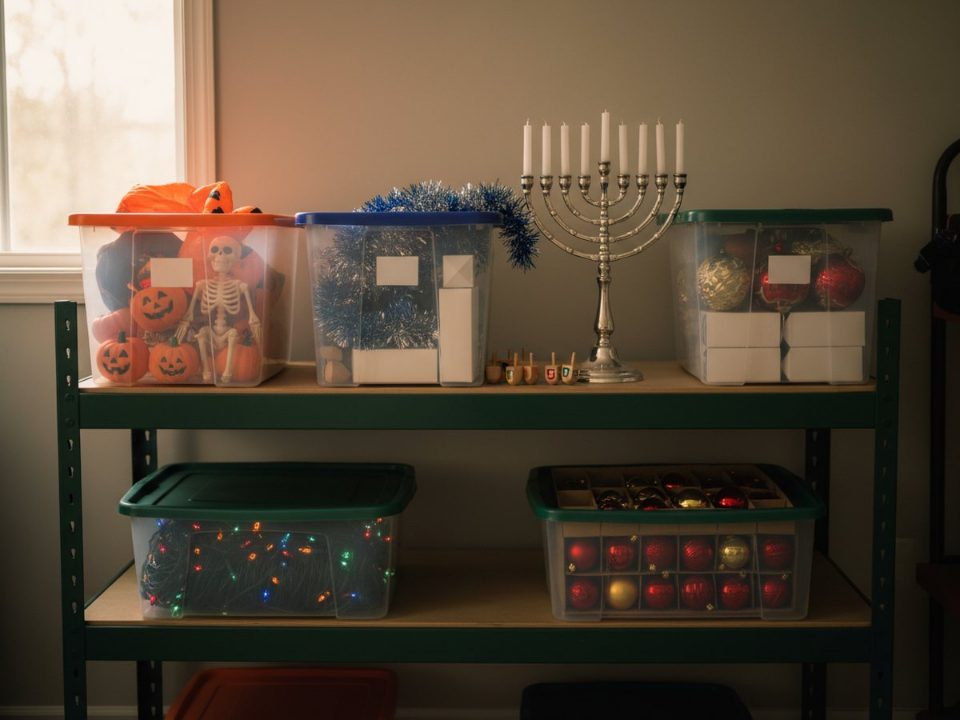
Holiday decoration storage: 10 tips for Halloween, Hanukkah, Christmas and more
October to January is one long storage season. Give each holiday its own tote and lid colour, pack powered props and inflatables the way their makers say, keep wax and latex out of the heat, and photograph each tote before it closes.
10 garage organization tips that still work in March
A few rules for the garage you already have. Zone by how often you reach for things, use one tote size, stay under the shelf rating, and photograph every bin so you never open six to find one.