How to store books long term: 10 ways to keep boxed books dry and flat
Paper soaks up whatever the air around it is doing. Pick a cool, dry, steady spot, pack the boxes the way a library shelves books, and keep a list of what's in each box so you don't have to open them all to find one title.

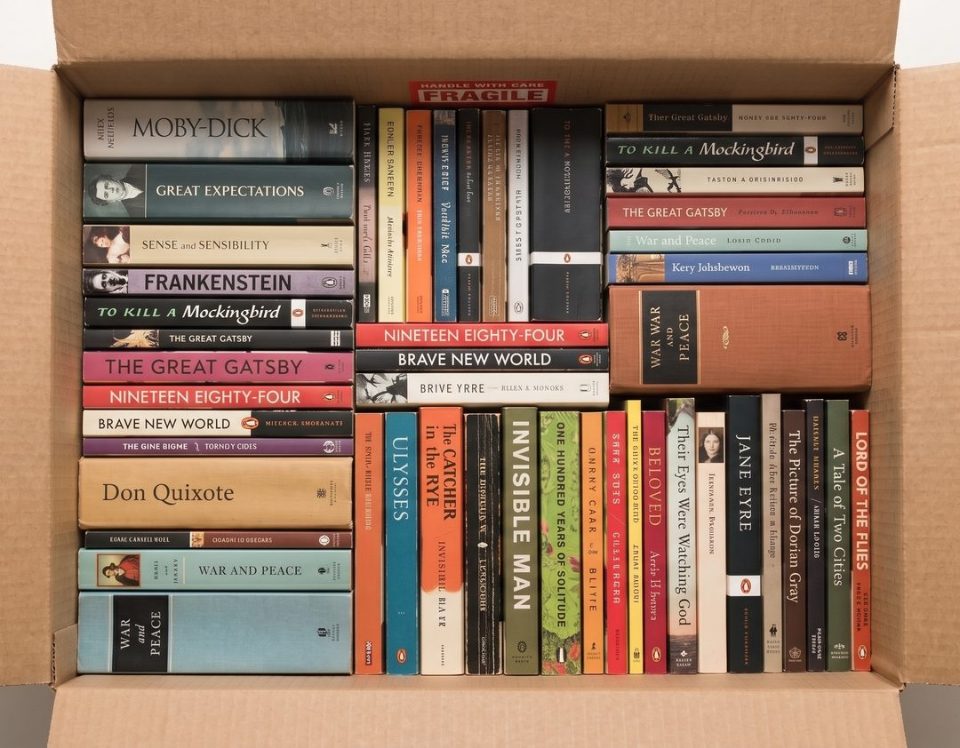
Books are one of the most common things people put into storage and one of the easiest to ruin there. Paper takes on moisture from the air, so a box of books ends up matching whatever room it sits in: damp in a damp basement, hot in a summer attic, swinging between the two in an unheated unit. Too much humidity and you get warped covers, mold and the brown spotting called foxing; too much heat and the paper ages faster. The good news is that libraries and conservators have published clear numbers and packing rules, and a household can follow most of them with ordinary boxes.
Know the target: 70°F or cooler and 30 to 55 percent humidity
The Library of Congress recommends a cool environment of 70°F or below with relative humidity between 30 and 55 percent. Its guide explains why both limits matter: above about 60 percent humidity books risk warping and mold, and below about 30 percent they can warp too as they dry out and contract. The Northeast Document Conservation Center (NEDCC) recommends cooler still for storage that's rarely opened, 40 to 50°F with 30 to 60 percent humidity, because heat speeds up the chemical aging of paper.
Steady matters as much as the number. NEDCC warns that wide swings in temperature and humidity damage collections, and the Library of Congress asks for a "stable, non-fluctuating" humidity. An inexpensive digital hygrometer in the storage spot will tell you more than any guess.
Keep books out of attics, garages, basements and outside walls
The Library of Congress says to avoid poorly insulated or uninsulated spaces such as basements, attics and garages, because of their temperature and humidity and the risk of leaks and floods. Collections conservator Deborah Howe puts it simply: an attic "might be fine in the winter, but can get too hot in summer," and a basement only works if it's cool and has no moisture problem.
Wherever the boxes end up, NEDCC says to keep books at least three inches from exterior walls (especially in basements), never directly on the floor, and away from pipes. In a house, the best spots are usually an interior closet or under a bed on the main floor.
In a storage unit, treat "not climate controlled" like a garage
A drive-up unit with a roll-up door is, for books, an uninsulated outbuilding: it follows the weather outside. If you're storing books for more than a season, the Library of Congress numbers argue for a climate-controlled unit. In any unit, put the book boxes on a pallet or shelf rather than the concrete, keep them off the back and side walls, and stack them in the middle where air moves, not under the roll-up door where rain blows in.
Clean and check every book before it goes in a box
Dust and food crumbs feed pests and hold moisture. The Library of Congress recommends dusting books with dusters that contain no fragrances or other chemicals. While each book is in your hand, look for mold. NEDCC describes active mold as feeling damp or smearing when touched, often with a musty or earthy smell; inactive mold looks dry and powdery and can still revive and cause allergies.
Keep any book with mold out of the box. NEDCC advises against sealing a moldy book in a plastic bag (unless it's going straight into a freezer), because that creates a microclimate that encourages more mold. Wrap it in paper, keep it apart, and for anything valuable, ask a conservator.
Choose the box: small, sturdy, and the right material for the job
Books are heavy, so use small boxes. The moving company North American recommends small boxes for books so each stays reasonably light and easy to carry.
Cardboard or plastic is a trade-off. Howe explains that "cardboard boxes allow books to breathe but don't protect against moisture," while in plastic containers "moisture can get trapped inside and books can get moldy." Plastic does help if there's a flood risk. The practical answer: cardboard in a dry, steady space, and plastic only where the humidity is under control and the books go in completely dry. Never seal books in plastic in a space that swings between warm and cold.
For books you care about, the Library of Congress recommends boxes labelled acid-free, lignin-free and buffered, and says any plastic used should be chemically stable without additives.
Pack them the way a library shelves them: upright or flat, never spine-up
Inside the box, follow the rules libraries use on shelves:
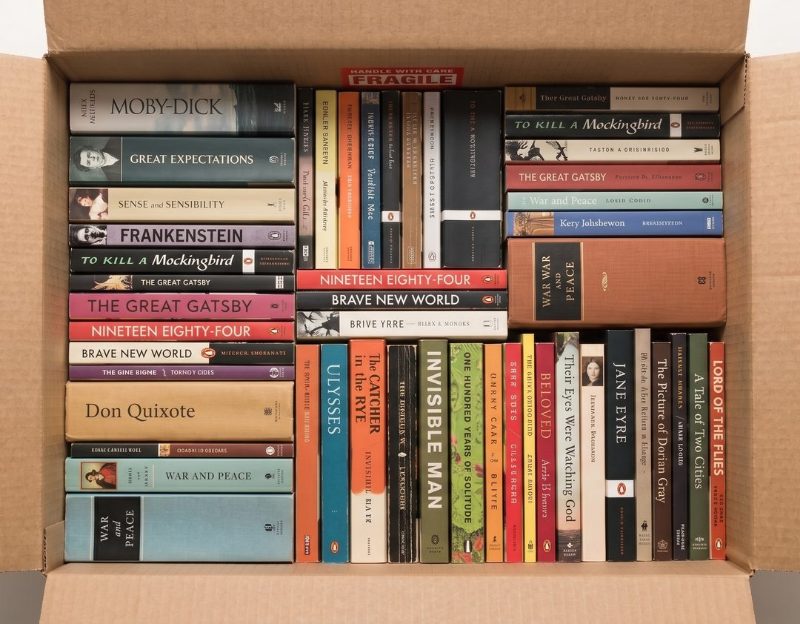
- Upright, like on a shelf, standing on their bottom edge and packed snugly so they support each other. North American suggests grouping books by size so small ones aren't crushed by big ones.
- Flat, for large or heavy books. NEDCC says very large or heavy volumes should lie flat, because standing upright can pull the pages away from the binding.
- Spine down if a tall book has to lie on its edge. The Library of Congress says that if a book must go in that way, the spine goes down.
- Never spine-up. NEDCC warns that with the spine up, the weight of the pages can pull the text block out of the binding.
Fill gaps with crumpled packing paper so nothing shifts, but don't jam books in so tight that the covers bend.
Keep air moving around the boxes
NEDCC says good air circulation helps prevent damp, stagnant pockets where mold starts, and suggests not blocking vents and periodically opening closed cabinets that sit against exterior walls. For boxes, that means a gap between the stack and the wall, a shelf or pallet under the bottom box, and not packing a closet so tightly that the back corner never gets any air.
Keep humidity down and the bugs stay away
The insects that damage books are mostly a humidity problem. Penn State Extension notes that silverfish can damage books, paper and wallpaper, thrive in high humidity, and are often found in basements; its first remedy is a dehumidifier in damp basements. Booklice feed on mold, which is why Utah State University Extension lists reducing relative humidity as the main control. Keep the storage space dry, keep food out of it, and check a box each season for tiny insects or droppings.
Give valuable and collectible books extra protection
Foxing, the scattered reddish-brown spots on old paper, is linked to fungi and to metal traces in the paper, and both get worse in humid air. Conservators recommend keeping paper at 40 to 60 percent humidity to avoid it. For books that matter (first editions, signed copies, family Bibles), North American suggests wrapping each one in acid-free paper so books don't stick together, and the Library of Congress recommends acid-free, lignin-free, buffered boxes. Pack these in their own boxes, keep them in the most stable spot you have, and photograph the title page and any inscription for your records. NEDCC suggests a conservator for items of high value.
Number every box and keep a list of what's inside
The hardest part of book storage is usually finding one book later. Number each box, write the number on two sides and the lid, and keep a list of the titles in each one: by author, series or subject, whatever you'll search by. A rough list is enough. "Box 12: Victorian novels, Dickens, the Brontës" saves you opening eleven boxes. The list also helps when a box gets damaged and you need to know what was in it.
How StorageBuddy helps with book storage
- The spines are the inventory. Snap the open box and the AI lists the titles it can read, with an outline on each book.
- Search by title. Type or say "Frankenstein" and get the box, its short code and where it sits in the unit or the house.
- Labels that open the list. QR labels (Avery sheets, Brother, DYMO or Niimbot printers) show a box's photo and contents to anyone who scans them.
- Room for a library. Free covers 10 containers per space with unlimited items, so a few hundred titles across ten boxes cost nothing; Plus or Lifetime lifts the box cap.
Free to start: your first 10 containers per space with unlimited items, QR labels, sharing, offline capture and full export. Plus and Lifetime lift the container cap. Nothing you catalog ever expires.
The book box checklist
Print it, stick it on the bin, tick it off. One page.
- Pick a spot that stays at 70°F or below and 30 to 55 percent humidity
- Rule out attics, garages, damp basements and exterior walls
- Choose a climate-controlled unit for books stored long term
- Dust each book and set aside any with mold or a musty smell
- Use small, sturdy boxes; acid-free boxes for valuable books
- Pack upright or flat, gaps filled, never spine-up
- Keep boxes off the floor and three inches from walls
- Run a dehumidifier in damp spaces; check a box each season for pests
- Wrap collectible books in acid-free paper and box them separately
- Number every box and keep a list of the titles inside
From “How to store books long term: 10 ways to keep boxed books dry and flat” · https://storagebuddy-ai.com/blog/how-to-store-books · StorageBuddy AI
Questions people ask
What is the best way to store books long term?
Somewhere cool (70°F or below) and dry (30 to 55 percent relative humidity), with steady conditions, per the Library of Congress. Clean and check each book, pack them upright or flat in small sturdy boxes (never spine-up), and keep the boxes off the floor and away from exterior walls.
Should I store books in plastic bins or cardboard boxes?
Cardboard breathes but doesn't protect against water; plastic protects against floods but can trap moisture and grow mold. Use cardboard in a dry, stable space and plastic only when the humidity is controlled and the books go in bone dry. Use acid-free, lignin-free boxes for valuable books.
Can I store books in a storage unit?
Yes, ideally a climate-controlled one. A non-climate-controlled unit swings with the weather like a garage. Put boxes on a pallet or shelf, away from the walls and the door, and keep a list of what's in each box.
Can I store books in the attic or basement?
The Library of Congress advises against attics, basements and garages because of heat, humidity and leak risk. A basement can work only if it's dry (a dehumidifier helps) and the boxes are off the floor and at least three inches from outside walls.
How do I stop silverfish and mold in stored books?
Control the humidity. Mold, silverfish and booklice all thrive in damp air, so a dehumidifier in damp spaces does most of the work. Clean books before packing, keep food out of the storage area, and never box a book that shows mold.
Sources & further reading
- Library of Congress, Preserving your books: storing your books: 70°F or below, 30 to 55 percent RH, avoid attics, basements and garages, shelving orientation, fragrance-free dusters, acid-free and lignin-free boxes.
- Library of Congress, Preserving your books: introduction: stable humidity no higher than 55 percent; warping and mold above 60 percent, warping below 30.
- NEDCC, Temperature, relative humidity, light, and air quality (Leaflet 2.1): storage set points and the damage done by fluctuations.
- NEDCC, Storage and handling for books and artifacts on paper (Leaflet 4.1): large books flat, no spine-up, three inches from exterior walls, off the floor, air circulation.
- NEDCC, Emergency salvage of moldy books and paper (Leaflet 3.8): recognizing active and inactive mold; don't seal moldy books in plastic.
- Dartmouth Alumni Magazine, Ask the expert: how to save your books: conservator Deborah Howe on cardboard vs plastic, attics and basements.
- North American Van Lines, How to pack books for moving: small boxes, group by size, fill gaps, acid-free paper for valuable books.
- Penn State Extension, Bristletails: silverfish and firebrats: damage to books and paper; dehumidify damp basements.
- Utah State University Extension, Booklice and psocids: feed on mold; reduce relative humidity.
- American Institute for Conservation wiki, Foxing: what foxing is and the 40 to 60 percent RH range that helps avoid it.
Keep reading
10 attic storage tips (and what should never go up there)
An attic is the hottest, least-visited room in the house. Store only what can take 140°F, and keep a record good enough that you never have to climb up and check.
10 basement storage ideas for a damp-prone space
Humidity damages basement storage over months, and a leak does it overnight. Measure the air, get everything off the concrete, replace cardboard with sealed totes, and keep an inventory so you know what's on the far shelf.
10 storage unit organization tips from people who pack them for a living
Heavy boxes low, nothing on the concrete, an aisle you can walk, labels facing you. Then the harder part: knowing which of forty boxes has the thing you came for.
Storage unit inventory: know what’s in the unit without driving there
Map the unit as locations, number every bin, photograph before you stack, share the list with whoever has a key.