How to store baby clothes for the next baby: 10 tips by size and season
Outgrown clothes leave in a steady trickle and are needed again all at once. Wash, sort by size and season, seal, label and photograph each bin so the next baby's first week isn't spent digging through storage.

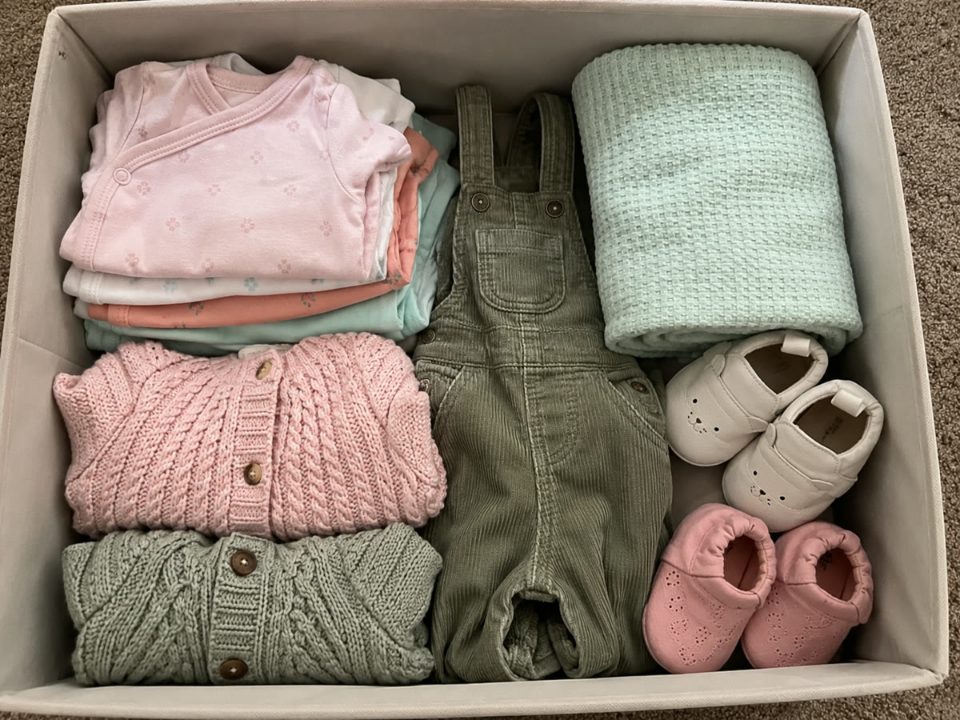
Baby clothes come in a lot of sizes that change fast, and you usually need the next size up at 6 a.m. with one hand. A workable system copes with the weekly trickle of outgrown clothes and the sudden rush back in. The tips below lean on what textile conservators and entomologists say about keeping clothes in good shape for two or three years.
Decide the three destinations before you fold anything
Every outgrown item is either kept for the next baby, kept for good (the coming-home outfit, the first shoes), or passed on (donated, sold, handed down now). Set up a bin, a keepsake box and a bag where you fold laundry, and sort as you go, one item at a time. Be honest about what leaves: stained, pilled and worn-out clothes won't look better in two years.
Wash everything, skip the softener, and store it bone dry
Stains you can't see yet (milk, spit-up, sunscreen) oxidise into yellow marks after a year in a bin. Wash everything before storing it, treat known spots, and skip fabric softener, which leaves a coating that attracts dust and yellows. Dry completely. Damp fabric in a sealed container mildews, and the smell doesn't come out. Washing also removes the skin oils and food traces that fabric pests feed on.
Sort by size and season, not by type of garment
A bin of every sleeper from newborn to 2T doesn't help at 6 a.m. Sort by size band first (newborn, 0 to 3 months, 3 to 6, 6 to 9, 9 to 12, 12 to 18, 18 to 24, 2T and up), then by season when a band is big enough to split. Socks, bibs, hats and swaddles go in a zip bag inside the matching size bin, not a separate catch-all.
Match the container to the time it'll wait
- A few months (the next size up): a fabric cube or open basket on the closet shelf, reachable with one hand.
- One to three years (the next baby): clean, rigid plastic totes with tight lids, all one size so they stack. Line them with a washed cotton pillowcase or old sheet so the clothes don't touch the plastic, and add a desiccant pack if the spot is damp.
- Keepsakes: not plastic. Textile conservators at North Carolina's historic sites warn that plasticizers and trapped moisture damage textiles kept long term in plastic bags or totes. Use an acid-free box with acid-free tissue, or a washed cotton sheet inside a sturdy box.
Vacuum bags are fine for a season of cotton basics. Don't use them for knits, structured pieces, or anything you'd hate to see creased.
Keep the bins out of the attic and off the basement floor
Attics reach well over 120°F in summer. That heat breaks down elastic, snaps, adhesives and dyes, and natural fibres up there attract pests. Basements are damp unless a dehumidifier keeps them under 50 percent, and the floor is where water arrives. The best spots, in order: the top shelf of the nursery or a spare closet, under a bed, a dry basement shelf well off the floor. If the attic is the only option, use sealed totes and keep wool and heirlooms elsewhere.
Moth-proof with clean clothes and tight lids
Baby knits are often wool or wool blends, and clothes moths and carpet beetles eat animal fibres, especially soiled ones. The University of Kentucky's extension notes that larvae need those soils to thrive and that clean items in tight containers are the protection that works. It rates cedar chests and blocks “seldom effective” because they don't seal. Mothballs are a pesticide, so they belong only in a sealed container and never in a nursery closet. Lavender sachets just smell nice.
Label the short side with size, season, count and date
Bins sit short-side out on a shelf, so label the short side (and the lid, if they're stacked) with the size band, season, a rough count (“~25 pieces”) and the date packed. Leave detailed contents off the outside, since they'll be wrong the first time you add a late sweater. A photo of the open bin can hold that detail.
Stage a “next up” bin where you'll need it
Growth spurts come without warning. Keep the next size up, already washed, in an open bin on the closet shelf or the dresser, and move pieces into the drawers as the current size gets tight. When that bin empties, the following size comes out of storage to replace it and the outgrown size gets packed away.
Photograph each bin open, then shut it
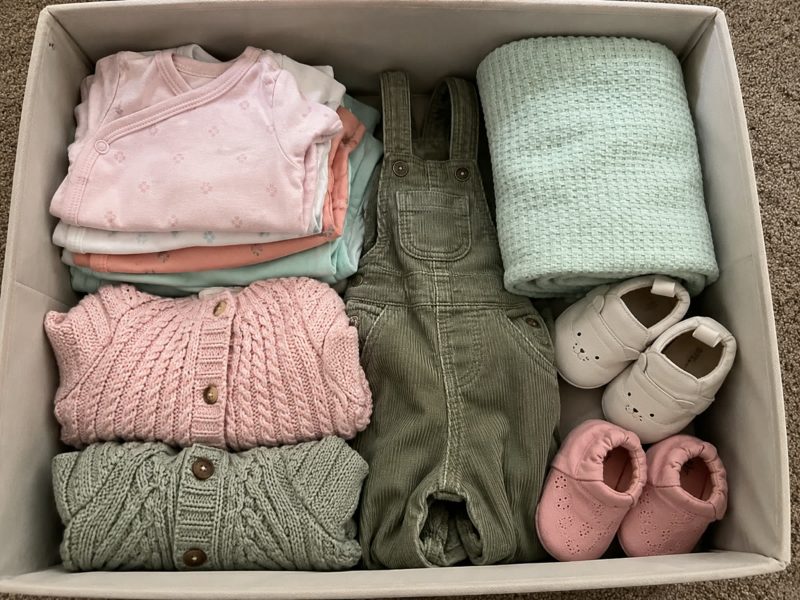
Before the lid goes on, take a top-down photo of the clothes with the label in frame. That photo answers most later questions (“did we keep a snowsuit in 12 to 18?”) and lets you offer a friend specific hand-me-downs without digging. Keep it with the bin's location.
Review every size change, and put a limit on the keepsake box
Each time you pack away a size band, look back over the previous one. Anything never worn, stained after all, or no longer wanted can be donated or sold while that size is still useful to someone. Give each child one keepsake box of a fixed size. Once it's full, something comes out before anything else goes in.
How StorageBuddy helps with baby clothes
- Find a size in one search. Tag bins by size and season, and a search returns every matching bin and where it is.
- The photo is the list. Snap the open bin and the AI itemizes it.
- Shared with family. Partner, grandparents and the babysitter see the same bins, and a QR label on each one opens its contents in a phone browser.
- Records follow the bin. When the 12 to 18 bin moves from the basement to the nursery closet, re-home it in two taps. The label stays the same.
Free to start: your first 10 containers per space with unlimited items, QR labels, sharing, offline capture and full export. Plus and Lifetime lift the container cap. Nothing you catalog ever expires.
The outgrown-clothes bin checklist
Print it, stick it on the bin, tick it off. One page.
- Set up three containers: next baby, keepsake, leave
- Wash without softener, treat spots, dry completely
- Sort by size band, then season; bag small items inside
- Line plastic totes with cotton; use acid-free boxes for keepsakes
- Store bins in a closet or under a bed, not the attic
- Skip cedar and mothballs; rely on clean clothes and tight lids
- Label the short side: size, season, count, date
- Stage the next size up in an open bin
- Photograph each open bin with its label in frame
- Review at each size change; cap the keepsake box
From “How to store baby clothes for the next baby: 10 tips by size and season” · https://storagebuddy-ai.com/blog/baby-clothes-storage · StorageBuddy AI
Questions people ask
How do you store baby clothes long term?
Wash without fabric softener, dry completely, sort by size band and season, and pack into cotton-lined plastic totes (acid-free boxes for keepsakes). Keep bins in a closet or under a bed, not a hot attic or damp basement floor.
Should baby clothes be stored in plastic bins or vacuum bags?
Rigid plastic totes with a cotton liner for one to three years. Vacuum bags only for short-term storage of cotton basics, not knits or anything with structure. For keepsakes, use acid-free boxes rather than plastic.
How do I organize outgrown kids' clothes?
Sort into next baby, keepsake and leave as you fold. Group the keepers by size band and season, stage the next size up in an open bin, and photograph each bin before it goes on the shelf.
How do I keep moths out of stored baby clothes?
Wash and dry everything first (pests feed on soiled natural fibres) and store it in tight-lidded containers. Don't rely on cedar or sachets. Mothballs are a pesticide and don't belong near a nursery.
Can I store baby clothes in the attic?
It's the worst option: summer heat degrades elastic, snaps and dyes, and natural fibres attract pests. If you have to, use sealed totes and keep wool and keepsakes out.
Sources & further reading
- North Carolina Historic Sites, Caring for your textiles: no plastic dry-cleaning bags or plastic totes for long-term textile storage; acid-free materials.
- University of Kentucky Entomology, Clothes moths (ENTFACT-609): clean before storage; tight containers; cedar seldom effective.
- Clemson Cooperative Extension HGIC, Controlling fabric pests.
- National Pesticide Information Center, Mothballs.
- Nebraska Extension, Care of quilts (G1820): no plastic bags; acid-free tissue or muslin.
- Louisiana Department of Energy and Natural Resources, attic ventilation note: attic temperatures.
Keep reading
10 toy storage ideas that survive a birthday party
Put fewer toys out, rotate the rest from labelled totes, give each category one home a child can reach, and keep small parts away from the toddler.
10 closet organization tips, including what to do with the off-season half
Half of what's in a closet is waiting for the weather to change. Organize the half you wear by reach, store the rest clean and sealed, and keep track of which bin the parka went into.
10 attic storage tips (and what should never go up there)
An attic is the hottest, least-visited room in the house. Store only what can take 140°F, and keep a record good enough that you never have to climb up and check.