10 toy storage ideas that survive a birthday party
Put fewer toys out, rotate the rest from labelled totes, give each category one home a child can reach, and keep small parts away from the toddler.
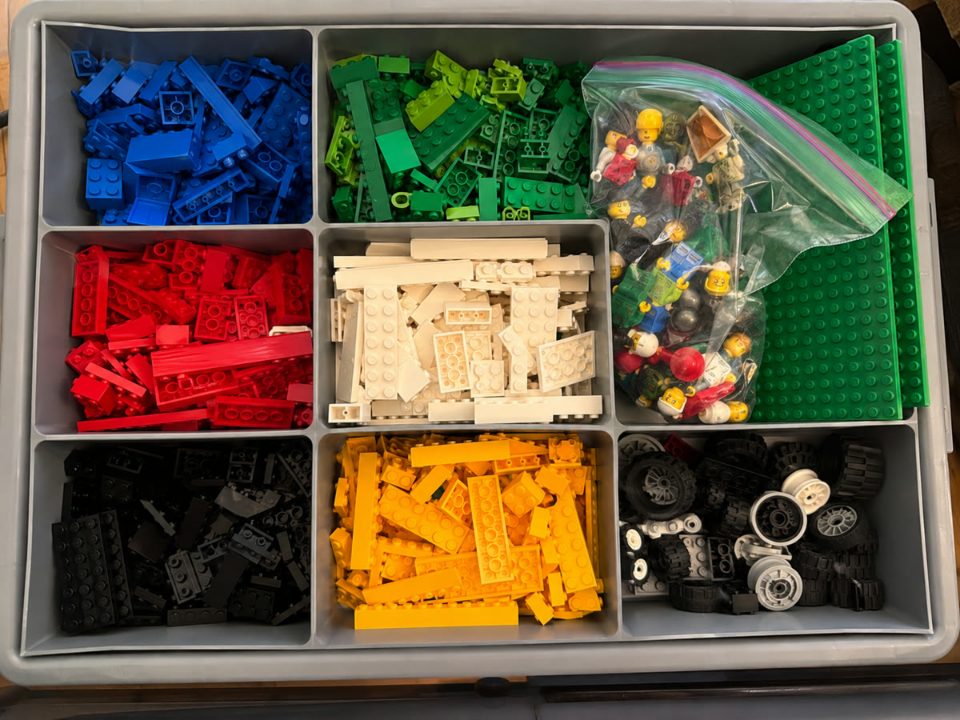
Most toy storage articles show the same photo: a cube shelf, matching fabric bins, and no sign of a marble run. Furniture is rarely the problem. Volume is. Toys arrive in waves, small parts migrate between rooms, and expensive sets become loose pieces within a week. These tips deal with that, and one of them is backed by a study.
Purge before the wave, not after
Clear space before a birthday or the holidays, while the child is thinking about what's coming instead of what's leaving. Sort into broken (recycle), outgrown or ignored (donate or sell), and duplicates (donate). Check secondhand and older toys against the CPSC recall list, which you can search by product and hazard. Let older kids help pick donations, but do the broken-and-recalled pass yourself.
Put most of the toys away, on purpose
In a 2018 study in Infant Behavior and Development, University of Toledo researchers gave 36 toddlers either four toys or sixteen. With four, the children played with each toy longer and in more varied ways. Keep a small set out in the play space and store the rest in totes. Rotation (tip 3) keeps the stored toys from being forgotten.
Run a rotation from labelled totes
Pack the stored toys into three or four lidded totes, each a mix: something to build, something for pretend play, a puzzle, a vehicle, a couple of books. Swap the tote that's out every two to four weeks. Number the totes and note on each lid when it last came out. If a child asks for a stored toy, swap that tote in next.
Sort by how it's played with, not by brand or character
Use categories that match play: building (blocks, bricks, magnetic tiles), pretend (kitchen, dolls, dress-up), vehicles, art, puzzles and games, books, outdoor. A child can put a car with the vehicles without knowing which movie it came from. Keep categories broad enough for a four-year-old to sort and few enough that each gets one bin.
Open bins low, lidded bins high
A toddler can drop blocks into an open bin but can't work a latch. Keep open bins on low shelves for the toys in rotation, and save lids for the storage totes up high. Cube shelves help because each cube holds one category. Pick shallow bins over deep ones, since kids tip a deep bin out to find anything in it.
Label with a picture and a word
Pre-readers match the picture, and early readers learn the word from it. Ohio State's Virtual Lab School notes that labelling bins with words and pictures helps children find materials and clean up. Use a photo of the actual contents or a simple drawing, laminated or in a sleeve, on the front of the bin at the child's eye level. Change the label when the contents change.
Keep small parts above toddler height, and know the two-hour rule
Federal rules ban small parts in toys for children under three, and the CPSC treats anything that fits inside its small-parts test cylinder as a choking hazard. In a mixed-age house, older siblings' sets, marbles, beads and doll accessories go in lidded bins up high. Button and coin batteries are worse: the CPSC warns a swallowed one can burn through a child's esophagus in as little as two hours. Make sure anything with a coin cell (musical books, remote toys, light-up shoes) has a screwed-shut battery door, and lock up the spares.
One home per category per floor, plus a migration basket
Toys travel between rooms. Give each floor one home for the categories that live there, plus an open basket for whatever drifted in from elsewhere. At bedtime the basket goes back to the playroom and gets sorted in a minute or two.
Keep sets together, with the instructions
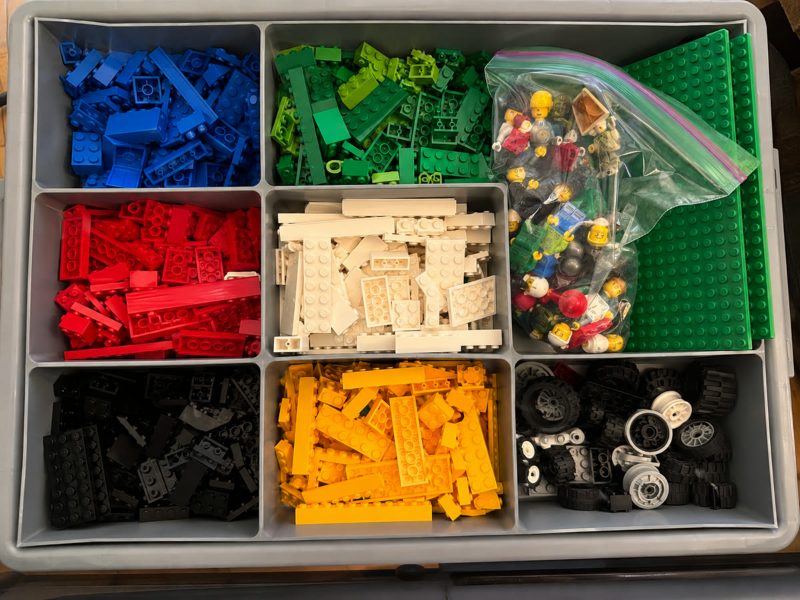
A building set, puzzle or board game is only worth keeping if it's complete. Bag puzzles with the box picture cut out and dropped in. Bag bricks by set with the instruction booklet, and keep game pieces bagged inside the game box. Photograph each set complete before it goes in the bag. For outgrown sets, the photo and the bag are what make them sellable later.
Make a keepsake box with a limit, and inventory the rest
Give each child one keepsake box of a fixed size for the first stuffed animal, the wooden train and so on. When it's full, something comes out before anything new goes in. Photograph the storage totes so you can tell whether a toy is in the playroom, a rotation tote or the basement without checking all three.
How StorageBuddy helps with toy storage
- Rotation without the rummage. Each tote has a photo and an item list, so you can swap without opening anything.
- “Where's the marble run?” Search or ask aloud and get the tote, closet and shelf, with the photo.
- Outgrown sets, findable later. Bagged sets in the basement have a container, a location and a picture for when it's time to sell or hand down.
- Family-wide. Grandparents and babysitters can scan a bin's QR label with a phone camera to see what's inside, no app needed.
Free to start: your first 10 containers per space with unlimited items, QR labels, sharing, offline capture and full export. Plus and Lifetime lift the container cap. Nothing you catalog ever expires.
The pre-birthday toy reset
Print it, stick it on the bin, tick it off. One page.
- Purge before birthdays and holidays
- Check older toys against the CPSC recall list
- Pack most toys into three or four rotation totes
- Number the totes and date each lid
- Sort by play type, one bin per category
- Use open bins low and lidded totes high
- Label bins with a picture and a word
- Keep small parts and coin-battery toys above toddler height
- Put a migration basket on each floor
- Bag sets with their instructions and photograph them
- Give each child one fixed-size keepsake box
From “10 toy storage ideas that survive a birthday party” · https://storagebuddy-ai.com/blog/toy-storage-ideas · StorageBuddy AI
Questions people ask
How often should you rotate toys?
Every two to four weeks is common. Swap sooner if the child loses interest, later if they're deep in a project.
How many toys should a toddler have out?
Fewer than you'd think. In the University of Toledo study, toddlers given four toys played with each one longer and more creatively than toddlers given sixteen.
How do I label toy bins for kids who can't read?
Put a picture of the contents next to the word, on the front of the bin at the child's eye level. Photos and simple drawings both work.
What's the best way to organize toys in a small space?
Put fewer toys out, keep the rest in rotation totes on a closet shelf, and use low open bins for what's in play.
What should I do with outgrown toys?
Sort them into donate, sell and keepsake. Check older toys against the CPSC recall list before passing them on, and keep sets complete with their instructions.
Sources & further reading
- Dauch C, Imwalle M, Ocasio B, Metz AE. “The influence of the number of toys in the environment on toddlers' play.” Infant Behavior and Development 2018;50:78-87. University of Toledo summary; British Psychological Society digest.
- U.S. Consumer Product Safety Commission, Small parts and choking hazard labeling FAQs and 16 CFR Part 1501.
- U.S. CPSC, Button cell and coin battery safety (Reese's Law) and recall search.
- Ohio State University Virtual Lab School, Learning environments: labelling materials: words and pictures on bins help children find and clean up.
Keep reading
10 closet organization tips, including what to do with the off-season half
Half of what's in a closet is waiting for the weather to change. Organize the half you wear by reach, store the rest clean and sealed, and keep track of which bin the parka went into.
10 attic storage tips (and what should never go up there)
An attic is the hottest, least-visited room in the house. Store only what can take 140°F, and keep a record good enough that you never have to climb up and check.
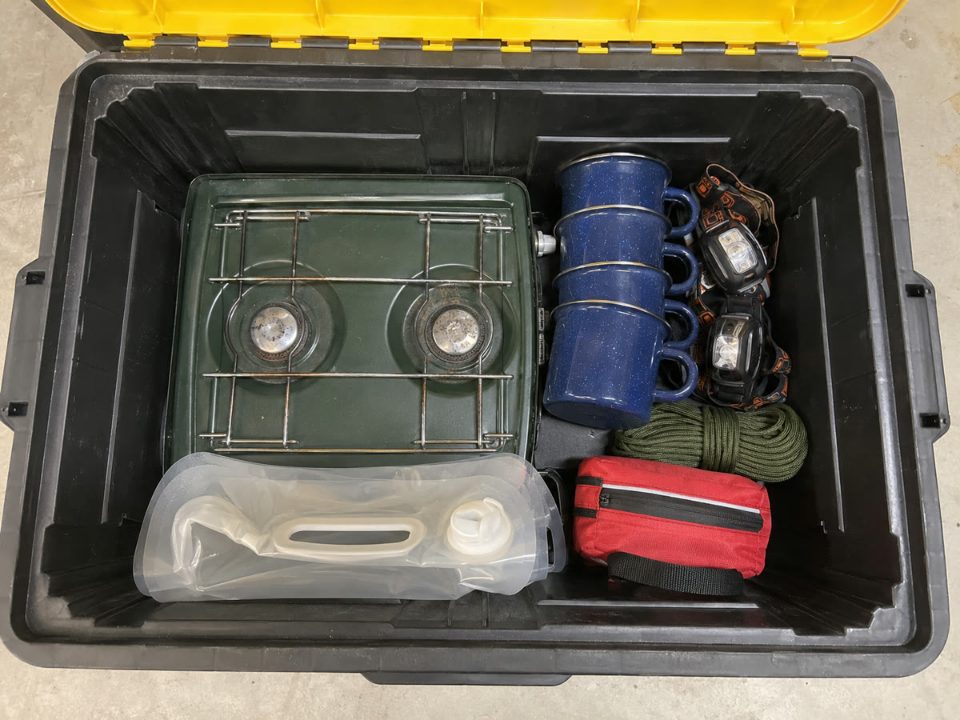
10 camping gear storage ideas so the next trip packs itself
Organize camping gear the week you get home, while you still know what ran out. Build kits by trip type, store soft goods loose, and use a photo of each tote as next summer's packing list.